
Pschuuri

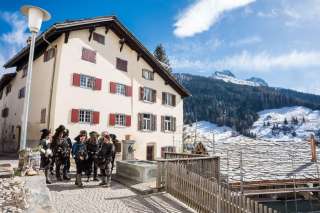
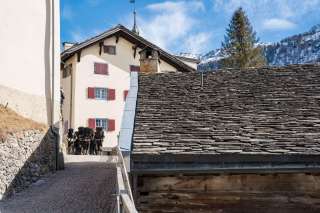
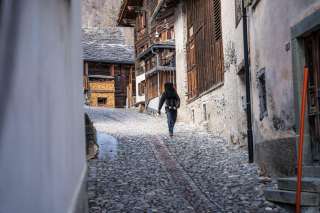
On Ash Wednesday, Splügen resembles an anthill. Schoolchildren and single girls appear in every nook and cranny, only to disappear back into the darkness in a flash. The "Pschuurirolli," the single boys who, wrapped in furs and carrying sacks of ashes, stalk the young people.
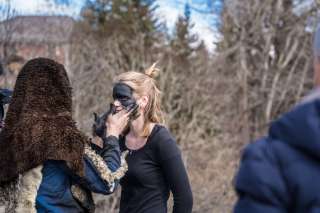
The hem roll, a leather belt studded with spherical bells that the "Maschgärä" (masks) wear around their waists, betrays them and gives the victims a small head start, which is usually not enough. The girls and children then run around the village with soot-blackened faces, as if they were chimney sweeps by trade.
They must all be "pschuuret" (blackened) by sunset. The recipe for making the black ash mass is a closely guarded secret, known only to a small group of insiders. In the evening, the scene changes. The feared creatures, now disguised as "Mannli and Wibli," go from house to house, demanding eggs. "Mannli and Wibli" remain masked during their visits to the villagers' homes and disguise their voices until the master of the house recognizes the young people.
Often, the begging couple disappears into the darkness with their loot, unrecognized. The collected eggs are used to make egg salad and "Resimäda," a drink made from wine, eggs, and other ingredients. These delicacies are served starting at midnight at the "Egg Feast." Everyone is invited to this celebration. According to tradition, these egg dishes and drinks are meant to strengthen the marriageable youth and promote the fertility of this generation and the fields.
Program
- In the morning, preschoolers and first- and second-graders dress up in costumes and go from house to house in groups, begging with the slogan "Pschuuri, Pschuuri Mittwuchä, äs Eischi oder äs Meitschi." They receive sweets, tangerines, nuts, or a sausage. They return home around lunchtime.
- At 1 p.m., the "Pschuurirolli," also called "Maschggerä" (masks), appear in the streets and try to blacken as many unmarried girls and children as possible until sunset.
- Starting at 7 p.m., the boys, along with the members of the youth team who arrived later, will gather eggs to make egg salad and the traditional drink "Resimäda." The girls, locals, and guests are invited to the festival in an old stable.
- At midnight, the “Maschggerä” lay their larvae, the egg feast begins and the celebrations continue until the early hours of the morning.


Prices:
Address
Contact us


Report error (ID: 4ef96999-eb8e-43c4-9cc5-70a82f0ede0c)